
GOVERNMENT COLLEGE MUNNAR
About the College
A Journey of Resilience, Learning and Transformation
An Institution Rooted in the High Ranges
Government College Munnar, established in 1995, is an institution of higher learning situated amidst the picturesque hills of Munnar in the Idukki district of Kerala. Founded with the vision of making higher education accessible to the people of the high ranges, the college has played an important role in fulfilling the educational aspirations of generations of students from the region.
Located in a region closely associated with tea plantations and the lives of plantation communities, the college has been a significant educational opportunity for students from ordinary working families. It has grown not merely as an academic institution, but also as a centre of social development, community engagement and intellectual growth.
The journey of Government College Munnar has been shaped by remarkable challenges, collective effort and an enduring commitment to education. Its history is a story of perseverance, rebuilding and the determination to move forward even in the face of adversity.
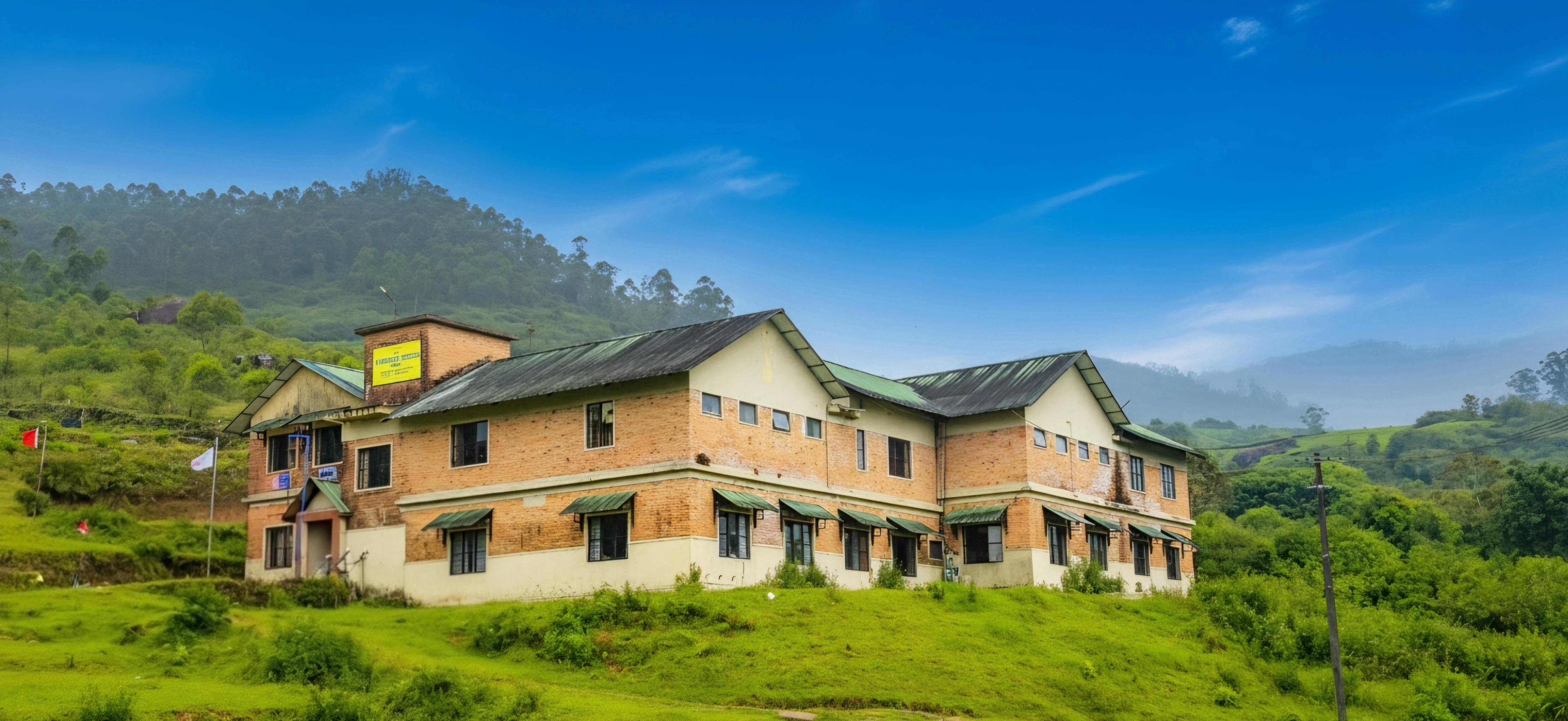
Government College Munnar
|
1995 Year of Establishment |
2005 First Major Landslide |
2018 Another Major Challenge |
OUR JOURNEY THROUGH THE YEARS
The History of the College
1995 | The Beginning
Government College Munnar began its journey in 1995 as a modest institution with a vision to provide accessible higher education to the people of the high ranges of Idukki. Its establishment opened new avenues for students who aspired to pursue higher education without having to travel long distances from their homes.
Although the beautiful hill station offered a unique setting, the difficult terrain and harsh climatic conditions presented considerable challenges. Students, many of whom came from plantation and other working-class families, found in the college an important opportunity to shape their future through education.
2005 | The Landslide
A major turning point in the history of the college occurred in 2005, when a devastating landslide struck the campus. A substantial portion of the academic block was damaged, rendering the original campus unsuitable for regular academic activities.
The college was subsequently shifted to a temporary campus. The available facilities were modest and inadequate for the needs of a full-fledged institution. Departments had to function in limited spaces, with very few facilities for seminars, public programmes, recreation and other student activities.
For several years, teachers, non-teaching staff and students continued their academic journey despite the limitations. The persistent rain, mist and cold of Munnar made the situation even more difficult. Yet, the college community remained committed to keeping the institution’s academic activities alive.
The Return | A New Beginning
After nearly five years in temporary premises, the college returned to its original campus. The return marked the beginning of a new chapter in its history, one defined by collective effort and determination to rebuild.
The campus, which had remained largely unused following the 2005 landslide, required considerable restoration. Students and members of the National Service Scheme (NSS) joined hands in clearing overgrown vegetation and preparing the premises for the resumption of academic activities.
Classes resumed with the facilities available at the time. Teachers from different departments shared common working spaces, and the college continued its activities with limited infrastructure. Nevertheless, the return to the original campus laid the foundation for gradual institutional development.
Rebuilding and Development
The years that followed witnessed a gradual transformation of the campus. Infrastructure development received greater attention, and the college began to acquire facilities that strengthened its academic environment.
The construction of a new academic block was completed, the office building was renovated and a seminar hall was established. Departments gradually received dedicated spaces, providing a more conducive environment for teaching, learning and academic interaction.
Despite limited sporting facilities, students began participating actively in university-level competitions and achieved several victories against institutions with much better infrastructure. These achievements became a source of pride for the college community. Teaching and non-teaching staff also participated in inter-collegiate and civil service competitions.
The introduction of new facilities and the growing participation of students in academic, cultural and sporting activities reflected the confidence and determination of an institution steadily rebuilding itself.
Academic and Community Engagement
As the institution gradually recovered from the difficulties of its past, its academic and co-curricular activities expanded. The National Service Scheme (NSS) played a significant role in connecting students with the wider community through various social and community-oriented programmes.
Several initiatives of the Government of Kerala, including Walk With a Scholar (WWS), Additional Skill Acquisition Programme (ASAP) and Student Support Programme (SSP), were introduced to provide students with opportunities for mentoring, skill development and academic support.
The college also began organizing national and international seminars, workshops and academic programmes across different disciplines. These activities enriched the academic environment and enabled students and faculty members to interact with scholars and experts from outside the institution.
The introduction of the Single Window System for admissions further widened the reach of the college, enabling students from distant parts of Kerala to seek admission and become part of its growing academic community.
Expansion of Campus Facilities
The period of institutional growth was accompanied by significant improvements in physical infrastructure. A new Ladies’ Hostel and Principal’s Quarters were completed, addressing important requirements of the college community. The hostel was particularly beneficial for students coming from distant places, offering them an affordable accommodation option.
Further improvements were made to the academic block, seminar hall and office complex. Construction of additional facilities, including the library building and staff quarters, also progressed.
An important milestone in this journey was the announcement by the Government of India recognizing the college as a Model College, opening up opportunities for further proposals and infrastructure development.
16 August 2018 | Another Devastating Landslide
Just as the college was entering a new phase of development, nature once again brought an extraordinary challenge. In August 2018, during a period of exceptionally heavy monsoon rainfall in Idukki, a massive landslide severely affected the college campus.
In the early hours of 16 August 2018, a large portion of the hill above the campus collapsed, causing extensive damage to college property. The newly completed Ladies’ Hostel and Principal’s Quarters, which were scheduled for their official inauguration on 19 August, were severely affected.
The disaster also damaged the well, pump house, an academic block housing the Economics and Mathematics classrooms, computer laboratory, ASAP room, concrete roads and compound wall. A large quantity of earth and debris moved towards the Kochi–Dhanushkodi National Highway and the Mattupetty River.
The college library, which housed thousands of books, was flooded with water and mud. The rear portion of the administrative building was filled with debris, while parts of the campus were transformed into a landscape of mud and rubble. Electricity and internet connectivity were also disrupted.
The disaster was a profound setback to the aspirations of hundreds of students and the entire college community. Facilities painstakingly developed over many years were damaged within a matter of hours. The tragedy was particularly painful as the college had just begun to witness the fruits of years of rebuilding.
THE SPIRIT OF OUR INSTITUTION
A Story of Resilience
The history of Government College Munnar cannot be understood merely through its buildings, dates and administrative milestones. It is equally the story of the people who sustained the institution through repeated adversity.
The college survived the landslide of 2005, endured years of inadequate facilities, returned to its original campus and gradually rebuilt its academic and physical infrastructure. When another devastating landslide struck in 2018, the institution once again faced the challenge of rebuilding.
Through every phase of this journey, the commitment of teachers, non-teaching staff, students, alumni and the local community has remained central to the institution’s progress.
From a modest institution established in 1995, Government College Munnar has evolved into an important centre of higher education in the high ranges. The mountains surrounding Munnar have repeatedly tested the institution, but every rebuilding effort has strengthened the determination of its community to move forward.
“The history of Government College Munnar is not simply the history of a campus. It is the story of an institution that has repeatedly risen from adversity, carrying with it the educational aspirations and dreams of generations of students from the high ranges.”
GOVERNMENT COLLEGE MUNNAR